
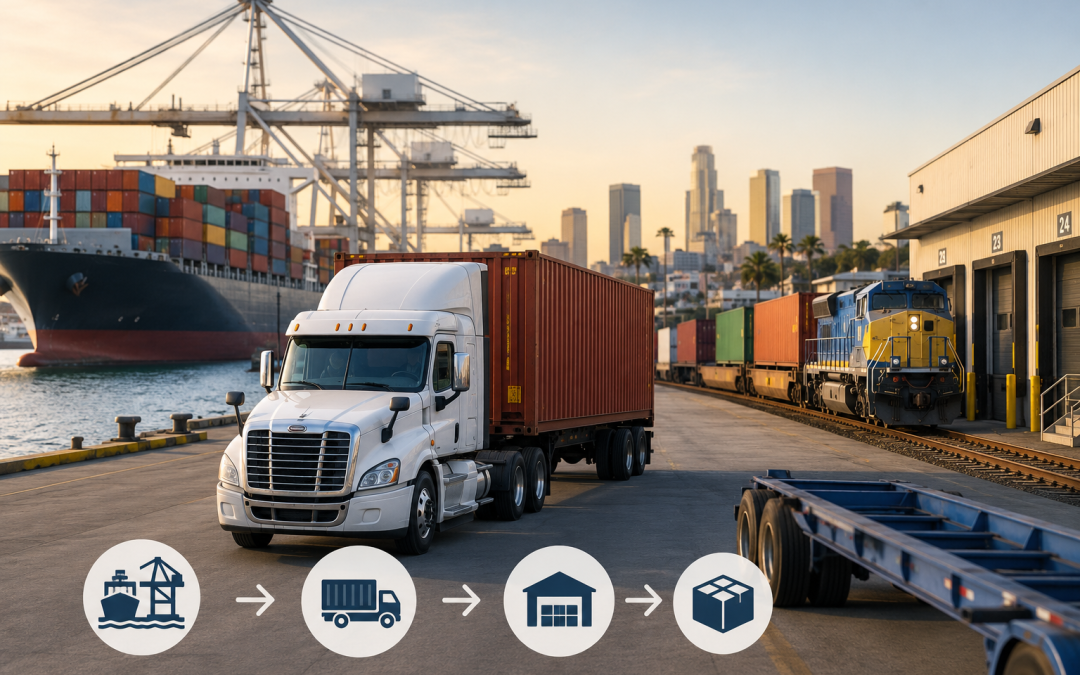
A drayage load board is a specialized digital marketplace for short-haul truck moves of containers and cargo from ports, rail yards or inland hubs. For shippers managing import, export or intermodal freight, selecting the right broker and load board can mean the difference between smooth flow and costly delays.
Understanding Drayage – The Short-Haul Backbone of Intermodal
Definition and key use-cases of drayage
Drayage refers to the transport of shipping containers or freight over a short distance, typically within the same metro area, between a port or rail terminal and a warehouse or distribution centre. Maersk+1
For example, a container arriving at the Port of Los Angeles may be hauled to a rail ramp or inland terminal for transload — that movement is a dray.
Why ports, rails and warehouses demand drayage capacity
Increasing container volumes, rail ramps farther inland, and tight appointment windows drive demand for carriers with terminal access, chassis availability, and dock discipline. If your dray capacity falters, you risk detention, demurrage and dissatisfied end-customers.
What a Drayage Load Board Does for Shippers and Carriers
Digital matching of loads, containers, chassis and certified carriers
Modern load boards specialise in intermodal and drayage moves: carriers with the right credentials are matched to container pickups, chassis hookups, gate-outs and deliveries. SPI Logistics+1
Differences vs general freight load boards (van, flatbed, LTL)
While traditional load boards list dry vans, reefers, flatbeds or LTL freight, a drayage load board filters specifically for container moves, chassis compatibility, terminal access, TWIC and rail clearances. That focus means you see fewer irrelevant loads and more port-ready capacity.
Why Use a Drayage Load Board if You’re a Shipper
Gain access to vetted dray fleets and port-ready capacity
Using a specialist load board gives you access to carriers verified for drayage operations, chassis, and container service. This mitigates risk compared to a general broker posting a load to all-equipment lists.
Avoid detention, demurrage and missed appointments
Late pickups or container dwell lead to detention and demurrage charges. A carrier sourced through a drayage load board is more likely to understand gate rules, chassis interchange and terminal timing.
Improve visibility and control of port-to-warehouse flows
Some platforms provide real-time load updates, BOL/POD uploads, and status tracking — these features help you monitor moves and manage exceptions rather than receive surprises.
Common Pitfalls When Shippers Use Load Boards Without a Truly Transparent Broker
Hidden margins, lack of carrier-name disclosure, back-solicitation trap
Many brokers list a load on a board, book a carrier, but keep the carrier’s name and true rate hidden. This obscures accountability and prevents shippers from building direct relationships with carriers. Back-solicitation clauses may also be buried in contracts.
Rate volatility, spot vs contract lanes, accessorial mystery
If a dray lane is treated purely as spot freight, rates fluctuate wildly; you may face unpredictable accessorials, chassis fees, detention surcharges. Without full cost visibility you can’t optimise.
How 1fr8.broker Uses Drayage Load Board Insights + Transparent Brokerage to Deliver Better Outcomes
Low fixed margin model – how it stabilises pricing
At 1fr8.broker we apply a fixed margin model. Unlike spread-based brokers, our margin stays the same regardless of market swings. That means your drayage rate is more predictable and aligns with your procurement goals.
Full carrier-name & rate disclosure – building direct shipper-carrier trust
We believe in complete transparency: you see the carrier name, equipment, rate and accessorials. That transparency fosters direct and sustainable relationships between you (the shipper) and the fleet.
Dedicated drayage lanes, drop trailer programs & route-guide planning
We support drayage-specific lane strategy: drop-trailer pools, defined port-to-warehouse corridors, and proactive scheduling of chassis and containers. This reduces wait times and improves OTP (on-time performance).
Carrier scorecards, safety & compliance vetting, accessorial transparency
Our carriers are asset-based, vetted for safety ratings, TWIC/terminal clearance, chassis interchange experience and detention exposure. We track metrics (claims ratio, detention minutes) and share summaries so you make informed decisions.
How Shippers Can Work With a Drayage Load Board + a Transparent Broker (Practical Steps)
Step 1: Define your drayage lanes and equipment requirements
Map your port or rail terminals, container types (20’, 40’, reefers, flatbed chassis), and delivery windows. Identifying your drayage lanes is step one.
Step 2: Request full cost breakdown (carrier-name, rate, margin, accessorials)
Ask your broker for a breakdown: carrier name, base rate, fixed margin, any scheduled accessorials (chassis fees, yard pull, detention). Transparency means no surprises.
Step 3: Build contract vs spot coverage and set a route-guide
For high-volume dray lanes you want contract coverage for stability; for overflow or irregular lanes you’ll still need spot flexibility. A route guide sets expected rates, carriers and performance benchmarks.
Step 4: Monitor performance metrics (on-time, detention, claims)
Track carrier performance: OTP (on-time percentage), minutes of detention per container, claims frequency, chassis interchange failures. Use these to refine your carrier roster and load-board strategy.
Frequently Asked Questions (FAQ)
What kinds of freight equipment are typical for drayage (chassis, containers, reefers, flatbed)?
Drayage often uses container chassis (skeletal trailers) to move 20’/40’ containers from terminal to warehouse. You may also see reefer containers (temperature-controlled), or flatbed chassis for oversized containers.
Can I use a drayage load board to test a carrier before contracting?
Yes. Many shippers use a load board and spot bookings to test performance (turn-time, detention, reliability) before establishing contract lanes with that carrier.
What is the difference between contract drayage lanes vs spot?
Contract lanes have pre-agreed rates, carriers and performance goals for a defined period, while spot drayage is booked ad-hoc and usually carries greater rate volatility and risk.
How do I avoid back-solicitation when using brokers and load boards?
Ensure your broker contract includes a clear clause: you can’t directly solicit the carrier without permission, or the margin disappears. With carrier-name transparency you reduce the “blind broker” risk; you may also include that you retain the right to move the carrier after contract expiration.
Partner with One Freight Broker
Drayage moves may be short in distance but they can carry outsized risk and cost in your supply chain. By using a specialist drayage load board and partnering with a transparent freight broker who discloses carrier names, margins and accessorials, you gain control. You reduce surprises, stabilize your cost base, and build direct, sustainable relationships with vetted dray fleets.
When you partner with One Freight Broker, you gain access to a vast network of carriers, competitive rates, and a team of experts dedicated to optimizing your shipping process. Whether you’re shipping domestically or require assistance with more complex logistics, we’re here to ensure your freight reaches its destination efficiently and cost-effectively.
At One Freight Broker, we’re committed to providing tailored logistics solutions that align with your shipping costs and needs, whether you’re navigating domestic shipments or exploring international logistics. Our deep industry knowledge and network of reliable carriers ensure your freight is in expert hands. Let us help you streamline your logistics for maximum efficiency and cost-effectiveness.
Contact Us Today
Ready to simplify your shipping experience? Contact One Freight Broker to discover how our expertise can benefit your business, ensuring your cargo is in safe hands every step of the way.
For more information on how we can assist your business, visit our website at 1fr8.broker.