
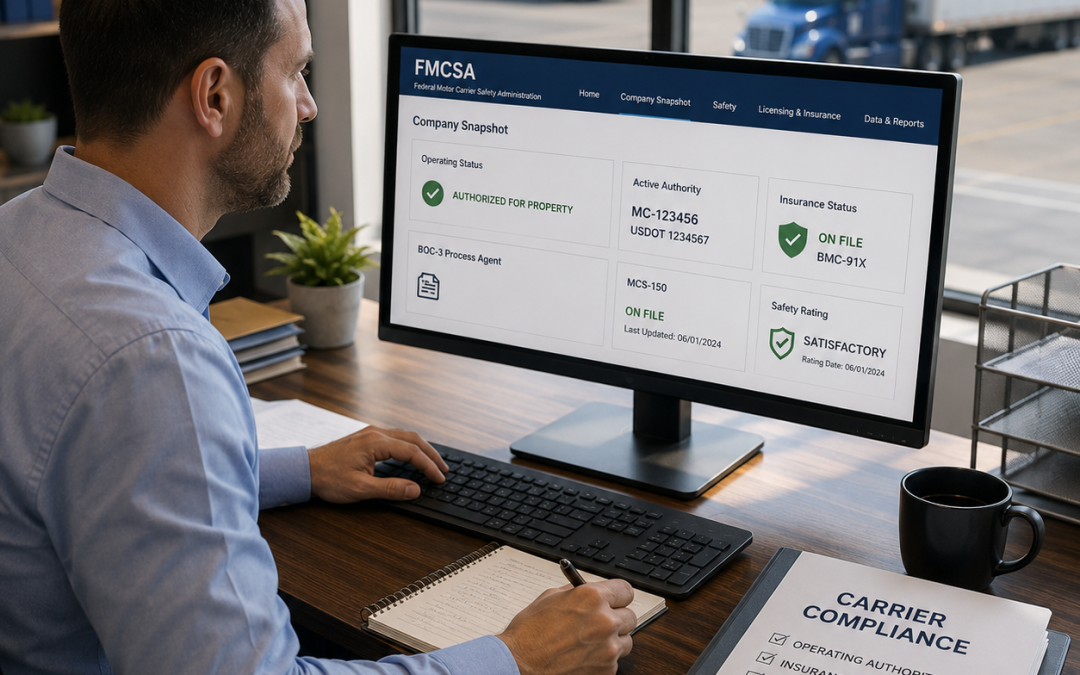
A carrier’s authority status sits at the center of freight safety and compliance. When a motor carrier is authorized for property, it has met the basic legal requirements to haul goods across state lines. Shippers rely on this status to reduce risk, improve reliability, and protect freight value.
What “Authorized for Property” Means in FMCSA Terms
FMCSA issues operating authority to carriers and brokers. A carrier is authorized for property when it has an active MC number, insurance filings in place, and a completed BOC 3. The carrier must also maintain an updated MCS 150 and meet federal regulations that govern interstate commerce.
Insurance is the most common reason authority becomes inactive. When a carrier’s BMC 91X is late or cancelled, FMCSA posts a revocation. A shipment tendered during a lapse is not protected. Shippers should watch these changes before awarding freight.
Authority Types Shippers Should Understand
Property Carrier Authority
This is the authority used for FTL and LTL freight. It applies to dry van, reefer, and flatbed carriers. The carrier must show public liability insurance at federal minimums and maintain compliance records.
Broker Authority
A freight broker arranges transportation. It does not haul freight. Broker authority requires a $75,000 surety bond and an active BOC 3. Brokers verify that carriers meet all requirements before tendering a load.
Household Goods vs Property
Household goods carriers handle personal items. Property carriers handle commercial freight. Many carriers hold only property authority, which is correct for industrial shipments.
Interstate vs Intrastate
Interstate carriers haul across state lines. Intrastate carriers operate within one state and may need separate authority. Many shippers move freight on interstate routes and must confirm that carriers have the correct authority.
Why Carrier Authority Matters for Freight Reliability
Authority status affects price, service, and claims exposure. When a carrier loses authority, it cannot haul freight. This disrupts lanes and complicates routing. For example, a reefer carrier running Chicago to Atlanta may lose authority due to an insurance cancellation. The load must be covered again, which increases the chance of late delivery or temperature risk.
Authority problems also correlate with emerging safety issues. A low safety score or missing documents can signal future service failures.
How Freight Brokers Verify Authority
Safety Rating Checks
Brokers review safety ratings through FMCSA and match them against internal scorecards. Conditional ratings may require additional review before tender.
Insurance Verification
A carrier must have public liability insurance on file. Brokers confirm the policy and the BMC 91X. Any pending cancellation creates risk.
COI Confirmation
Shippers often request a certificate of insurance. A transparent broker checks that the name on the COI matches the carrier and the MC number.
Monitoring for Revocations and Reinstatements
Authority status changes daily. Good brokers review revocations, reinstatements, and safety updates before each shipment. This protects against mid transit compliance failures.
Transparent Carrier Vetting at One Freight Broker
One Freight Broker uses a low fixed margin model. This improves rate stability because the cost does not change when capacity tightens. We disclose carrier names and rates so shippers understand each buy and sell line.
Every carrier is reviewed across safety history, insurance records, claims ratios, lane fit, and on time performance. Scorecards track detention, accessorials, and service. Reefer carriers are evaluated for temperature control history. Flatbed fleets are checked for securement practices.
This process supports transparent pricing and reliable service.
How to Use Authority Status in Procurement and Route Guides
Authority status helps shippers build stronger routing plans. During RFPs, teams can compare carrier authority age, insurance history, and safety trends. Carriers with clean profiles often perform better on dedicated lanes.
A lane profiling example is Dallas to Chicago dry van. During peak season, carriers with new authority may offer lower rates but carry higher risk. Established fleets with stable insurance and solid scorecards deliver more consistent results.
Authority also ties into contract vs spot decisions. Carriers with unstable authority histories may not be ideal for contracted freight. Route guides improve when carrier authority data is part of the scoring system.
FAQs
What is authorized for property
It means a carrier has FMCSA approval to haul commercial freight across state lines.
Does a carrier need authority for interstate shipments
Yes. Interstate commerce requires active authority.
What happens if a carrier loses authority during a shipment
FMCSA may prevent the carrier from continuing. The load may need to be retendered.
How do brokers verify carrier authority
They check FMCSA records, insurance filings, safety ratings, and COI details.
How often does authority status change
Insurance activity can change daily. Many brokers run checks before each tender.
To request a transparent quote or learn more, visit 1fr8.broker.