
The world of freight and logistics is fast-paced and ever-moving. Amidst all the craziness, trucking brokerage services help make sure goods can get from point A to point B as smoothly and efficiently as possible.
Whether you’re a shipper trying to move products across the country or an independent trucker looking for steady loads, you may find yourself working with them. Trucking brokerage services, also known as freight brokerages, serve as the connective tissue that brings supply and demand together.
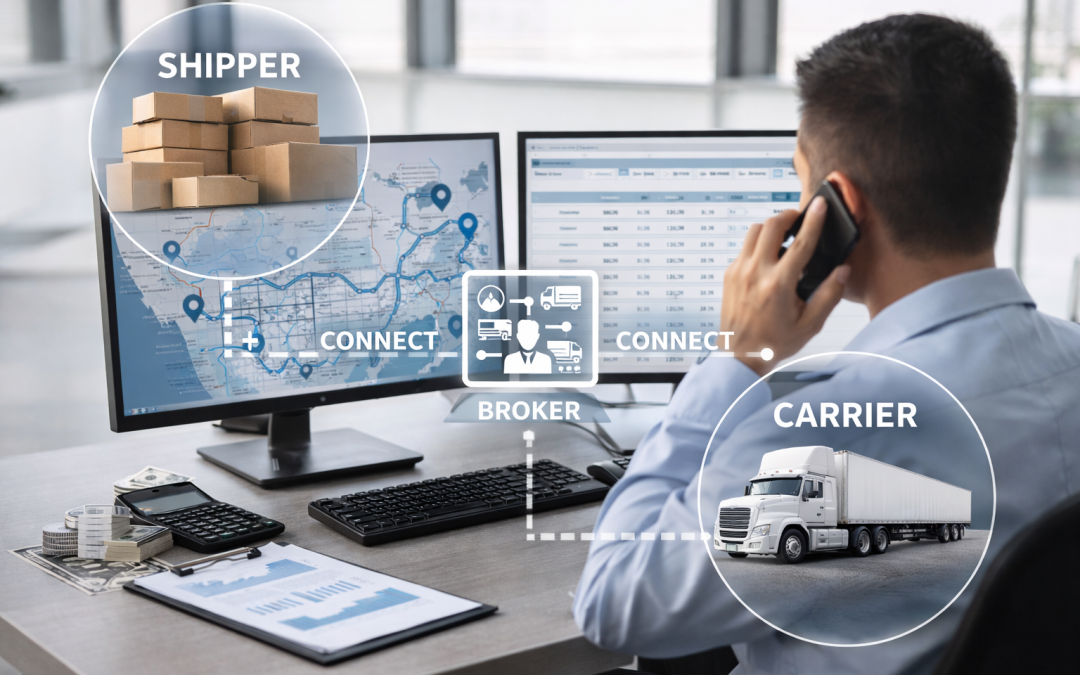
Freight brokers are the intermediaries that connect shippers with carriers. These are third-party companies or professionals who arrange the transport of freight between those who have goods that need to be moved and those who have the capacity to move them.
Brokers don’t own trucks themselves. Instead, they use their knowledge, network, and technology to match freight with available and reliable carriers. Beyond being matchmakers, they also handle all the logistics involved in the shipping process so that everything happens smoothly.
Here, One Freight Broker will break down what trucking brokerage services are, how they work, who benefits from them, and the qualities they need to possess. Let’s take a closer look.
What Are Trucking Brokerage Services?
The process of trucking brokerage typically involves several steps, and it all starts with a shipper contacting the broker with details about the freight—weight, dimensions, destination, pickup time, etc. This broker will use their well-established network of connections within the freight industry to find the most suitable carrier for this load.
Once they have located a good carrier for the task, they will negotiate a rate between the two parties. Their goal is to get a good price for their client while still making sure that the carrier is paid appropriately. With everything in order, the carrier can pick up the load and transport it to its destination.
Throughout this whole process, the broker handles all communication, paperwork, and tracking. Once it’s done, the broker will pay the carrier and invoice the shipper, keeping a percentage as profit (which is the broker’s margin).
As you can see, the role of a freight broker involves several responsibilities. Here are some of the biggest ones:
Connecting Shippers and Carriers
At the core of a freight broker’s job is acting as the middleman between shippers and carriers. This is why they spend a lot of time building their network of trusted trucking companies and logistics providers. It allows them to quickly match available loads with reliable carriers. Their ability to make these connections efficiently keeps the supply chain moving while avoiding delays for both sides.
Negotiating Rates
Freight brokers have a deep understanding of market conditions, fuel costs, carrier availability, and seasonal trends. This is necessary because negotiating rates between shippers and carriers is one of their main responsibilities. They need to make sure the deal benefits both parties.
A skilled broker balances cost-efficiency for the shipper with fair compensation for the carrier, often earning a margin based on the rate spread between what the shipper pays and what the carrier accepts.
Coordinating Logistics
Once a shipment is booked, the broker manages all aspects of the transportation process to ensure it runs smoothly. They schedule pickups and deliveries, track loads in transit, and resolve any issues that arise on the road.
Handling logistics also involves taking care of the paperwork. Brokers are responsible for handling the extensive documentation involved in shipping freight, such as bills of lading, rate confirmations, contracts, and carrier packets. They check to see if all documents are accurate and compliant with federal and industry regulations.
Proper paperwork protects all parties from legal and financial risks, avoiding unnecessary headaches that distract from your core operations.
Providing Customer Service
A good freight broker acts as the main point of contact for both shippers and carriers, offering updates, answering questions, and resolving disputes or delays. Excellent communication skills and a service-first attitude help brokers build long-term relationships, which are key in a highly competitive industry. Whether it’s an urgent shipment or a billing concern, customers rely on brokers to respond quickly and professionally.
Who Uses Trucking Brokerage Services?
Freight brokers serve a variety of clients, including manufacturers, small businesses, owner-operators, and small fleet carriers. Manufacturers that move high volumes of goods across regions rely on trucking brokerage services to streamline their shipping process and reduce downtime. It also lets them avoid the cost of maintaining an in-house logistics team.
Similarly, retailers and e-commerce businesses benefit from brokers’ ability to arrange fast, dependable transportation to meet the demands of nationwide distribution, which is especially important during peak seasons or promotional surges.
Agricultural producers and food suppliers often require time-sensitive and temperature-controlled transport, making freight brokers a valuable resource in making sure products reach their destination fresh and on time. Small businesses that lack the resources for dedicated shipping departments often turn to brokers for specialized freight needs.
On the flip side, brokers also work with various types of carriers. For example, owner-operators and small fleet carriers depend on freight brokers for consistent access to paying loads. With their help, carriers can minimize deadhead miles and stay profitable.
Benefits of Using Trucking Brokerage Services
Whether you’re a small business shipping regionally or a large enterprise managing cross-country logistics, working with a reliable broker can significantly improve your supply chain performance. Here are some of the benefits of using trucking brokerage services:
Access to a Large Carrier Network
Brokers maintain relationships with thousands of vetted carriers, giving shippers instant access to a wide and diverse network. This means you’re not limited to local or known providers. You also don’t have to rely too much on load boards. With their connections, brokers can find capacity exactly when you need it, even in tight markets or during peak seasons. This flexibility lets shippers move their loads faster even if they don’t have their own carrier list.
Cost Efficiency
Speaking of connections, they leverage this to negotiate better rates than most individual shippers could on their own. Brokers understand market fluctuations and can secure competitive pricing based on factors like trends and market conditions. Over time, this can lead to substantial cost savings. This is particularly beneficial for companies that don’t have the volume to qualify for direct carrier discounts.
Time Savings
From load planning, vetting carriers, handling paperwork, and maintaining communication, managing shipments in-house can be time-consuming. But with the help of a freight broker, all of these tasks can be handled for you, allowing you to focus more energy on your core operations. By freeing up your internal resources, brokers help streamline your business process, allowing for faster booking and fewer disruptions in the supply chain.
Risk Reduction
Before assigning carriers to a particular load, brokers verify their credentials, insurance, and safety records to reduce risk. This is also why they prefer to work with trucking companies that are already proven and tested. Carriers who are reliable tend to get added to the broker’s network, allowing for faster load matching.
Many brokers also offer cargo insurance options and assist with claims if something goes wrong. Their expertise in compliance and regulations helps protect shippers from costly errors and potential legal issues.
Technology & Tracking
Modern freight brokers rely on sophisticated technology platforms to give their clients real-time visibility. These digital tools also improve transparency and communication, allowing shippers to feel more confident in the whole process. From GPS tracking to automated updates and digital documentation, brokers help you stay informed without constantly chasing down carriers.
Key Skills and Traits of a Good Freight Broker
While working with a freight broker comes with numerous benefits, it’s important to remember that not all brokers are created equal. The best brokers bring a blend of soft skills, industry knowledge, and real-world experience to the table. Here are some qualities you need to look for in a trucking brokerage service:
An Organized and Detail-Oriented Approach
Freight brokering involves juggling multiple loads, deadlines, documents, and client needs at once. Therefore, you need to work with a broker who can stay organized, track every shipment detail, and ensure that nothing falls through the cracks.
Problem-Solving Ability (Especially When Delays or Issues Arise)
Delays, breakdowns, and misrouted shipments are part of the job. The best brokers remain calm under pressure and can think quickly to resolve issues to minimize their impact. Problem-solving is what turns an average broker into a trusted logistics partner. Experienced ones even know how to anticipate potential problems and prepare for them accordingly.
Good Relationships with Carriers and Shippers
This is the defining characteristic of a great freight broker. A solid network of carriers and shippers means that they possess all the good qualities you are looking for. They have established these connections and built trust over time, creating a cycle of work opportunities for all parties involved.
Successful brokers nurture relationships and maintain professionalism in every interaction. Having a network of carriers and shippers is a good sign of that.
Work with One Freight Broker
Trucking brokerage services are an essential link in the logistics chain. Not only do they help shippers move freight quickly and affordably, they also give carriers access to jobs that they might not find otherwise.
If you’re a shipper needing flexible logistics solutions or a driver looking for steady work, the right freight broker can be the key to keeping your business rolling forward. Choose One Freight Broker.
One Freight Broker is the go-to choice for shippers everywhere, offering reliable freight transportation services, exceptional customer service, technology-driven solutions, and a wide range of services that covers everything you need. Whether it’s LTL to FTL, domestic to international, to expedited shipping—we’ve got you covered.
Since our founding in 2013, we have significantly reduced shipping costs for our clients, amounting to tens of millions in savings, and have enhanced the profitability of asset fleets by reducing their dependence on intermediaries. Our unique and inclusive approach enables our clients to build direct, beneficial, and enduring connections with reliable trucking allies.
At One Freight Broker, we’re committed to providing tailored logistics solutions that align with your shipping costs and needs, whether you’re navigating domestic shipments or exploring international logistics. Our deep industry knowledge and network of reliable carriers ensure your freight is in expert hands. Let us help you streamline your logistics for maximum efficiency and cost-effectiveness.
Contact Us Today
Ready to simplify your shipping experience? Contact One Freight Broker to discover how our expertise can benefit your business, ensuring your cargo is in safe hands every step of the way.
For more information on how we can assist your business, visit our website at 1fr8.broker.