
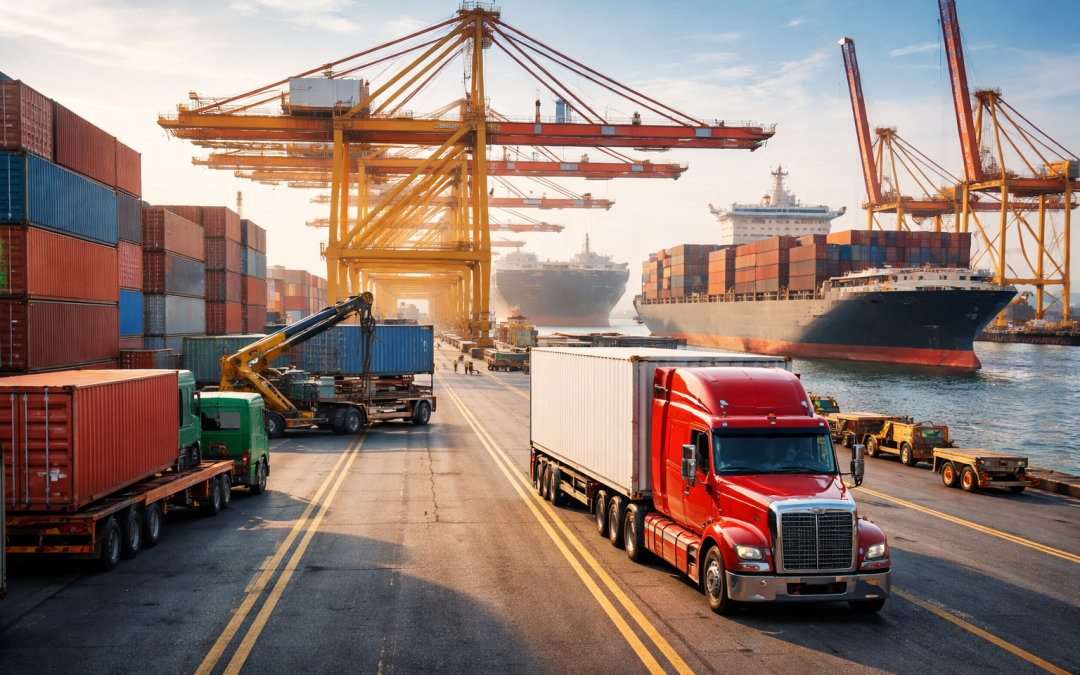
If the freight industry is the beating heart of global trade, then ports are like the ‘arteries’ that keep goods moving. For freight carriers, truckers, and brokers, getting loads directly from ports can be a game-changer. Not only do port loads typically offer high volumes, but they’re often well-paid due to the urgency and scale of international trade.
But how do you tap into this opportunity?
This is what One Freight Broker is going to talk about here today. This guide will walk you through the ins and outs of getting freight loads from ports: from understanding port operations to building the relationships and infrastructure necessary to make it work.
Why Ports Are Prime for Freight Loads
Ports handle the majority of goods entering and leaving a country, whether by sea or air. Interestingly, ports handle over $5.4 trillion in economic activity every year in the US alone. That’s a massive amount of freight that has to be moved inland, usually by trucks. As a carrier, this should matter to you because it’s a great source of consistent business.
Consistent Demand
Ports operate around the clock, with ships arriving and departing daily. This constant flow of goods creates a steady stream of freight that needs immediate transportation. For carriers, this provides reliable opportunities to find work and keep their trucks moving.
High-Volume Clients
Carriers can also get the chance to build long-term, lucrative relationships. This is because working at ports means partnering with importers, exporters, freight forwarders, and logistics companies that manage large-scale operations. With their need for regular and repeat service, carriers can capitalize on this and start expanding their network.
Faster Turnover
Freight loads from ports typically come with tight delivery schedules, which pushes for quicker job completion. This urgency can often translate into faster payment cycles and more frequent hauling opportunities. Ultimately, port loads help carriers maximize efficiency and cash flow.
Types of Freight Coming Through Ports
With the benefits of port loads covered, we should take a look at the various types of cargo that usually come through ports. Understanding these types can help carriers decide what equipment and partnerships they’ll need.
Remember that each type of cargo presents unique handling, storage, and transportation challenges. Whether you’re a port operator, freight forwarder, or logistics company, knowing what’s coming in and going out helps streamline processes and reduce delays.
Containerized Freight
Containerized freight is the most common type of cargo moving through modern ports. Goods are packed into standardized containers, typically 20 or 40 feet long, which can be easily transferred between ships, trucks, and trains.
This method improves security and reduces cargo damage, which is why it is used for a wide variety of goods from electronics to clothing. Containerized freight also speeds up handling times, making it an essential part of the global trade.
Breakbulk Cargo
Breakbulk cargo are goods that must be loaded individually rather than in containers. These might include large machinery, vehicles, steel girders, or construction materials.
To handle breakbulk, carriers will need specialized equipment like cranes and forklifts. Not only that, it is also essential to have some extra coordination to make sure the cargo is properly secured. While it is less efficient than containerized freight, breakbulk is crucial for oversized or heavy items that don’t fit into standard containers.
Perishables
Perishable cargo includes food, flowers, pharmaceuticals, and other goods that must be kept within specific temperature ranges to maintain quality and safety.
This type of freight also requires specialized equipment, specifically refrigerated containers (reefers) and cold storage facilities. Because these are perishables, tight coordination is required to minimize transit times and avoid spoilage—all while meeting strict regulatory requirements.
Hazardous Materials
Finally, hazardous materials include chemicals, flammable liquids, gases, and other substances that pose a risk to health, safety, or the environment. These goods require strict handling procedures, specialized containment, and regulatory compliance. These hazardous materials also need proper labeling and documentation.
Ports dealing with hazardous cargo need trained staff who know how to handle it. They also require designated storage areas and emergency response plans to manage potential incidents and ensure the safety of all operations.
How to Get Loads from Ports
Getting loads from ports can seem daunting at first, especially if you’re new to the logistics or freight industry. But learning how to pull it off is necessary if you want your trucking business to become more profitable. With the right steps and a clear understanding of the process, it becomes much more manageable.
Here’s a breakdown of the key steps to help you get started in the world of port freight:
Step 1: Get TWIC Certified
To secure port areas, first you need to obtain a Transportation Worker Identification Credential (TWIC). This credential is issued by the Transportation Security Administration (TSA) and is mandatory for any personnel who need unescorted access to secure areas of maritime facilities and vessels.
The application process involves a background check and fingerprinting, and once approved, the card is valid for five years. Without a TWIC, you will not be allowed to enter most major ports, making this step non-negotiable.
Step 2: Register with Port Authorities
Once TWIC certified, the next step is to register with the specific port(s) where you plan to do business. Each port authority may have its own registration process. This can include submitting your business credentials, vehicle details, and proof of insurance.
Some ports also require additional security credentials or clearances. For up-to-date requirements and forms, you need to contact the port administration directly or visit their website.
Step 3: Partner with a Drayage Company—or Become One
Drayage refers to the transport of goods over a short distance, typically from a port to a nearby warehouse or rail terminal. If you’re just starting out, partnering with an established drayage company can be a great way to gain access to port freight without handling all the logistics yourself.
Alternatively, if you have the resources and proper licensing, you can become a drayage provider and contract directly with freight brokers or shippers.
Step 4: Invest in Proper Equipment
One Freight Broker recommends securing specific equipment such as chassis to carry containers, GPS tracking systems, and vehicles that meet port emission standards if you want to handle port freight.
Investing in reliable, port-compliant equipment not only ensures safety and compliance but also makes your services more attractive to brokers and shippers. It’s also worth looking into any technology the port requires for container tracking and communications.
Step 5: Build Relationships with Freight Brokers
Freight brokers are intermediaries who act as the bridge between shippers and carriers. These matchmakers make the lives of everyone involved in the shipping process a lot easier since they handle everything from paperwork to communication to compliance to negotiations. They handle the logistics of the shipping process so that shippers and carriers can spend more energy on their core operations.
Building strong relationships with brokers can therefore help you get a steady stream of port-related loads. Look for brokers who specialize in port freight and prove your reliability through on-time deliveries and professional communication. This is how you create long-lasting partnerships in this industry.
As you build a reputation through your day-to-day operations, you may also get access to higher-paying and consistent work, making brokers a key part of your port freight success.
If you are a freight broker, make sure you use your negotiation skills and some marketing and advertising to connect with more carriers. Also take some freight broker courses to slowly build your successful freight brokerage.
Compliance, Permits, and Licensing
When operating within the logistics and drayage industry, it is important to secure the proper compliance, permits, and licensing to ensure smooth and legal access to port facilities.
In addition to obtaining a TWIC and completing specific port registrations, carriers must apply for an MC (Motor Carrier) and DOT (Department of Transportation) number through the Federal Motor Carrier Safety Administration (FMCSA). These credentials are foundational for interstate transport.
The Unified Carrier Registration (UCR) is also required annually to legally operate across state lines. If you are accessing major ports, you may also need a Standard Carrier Alpha Code or SCAC which is used for container tracking and security purposes.
Take note that beyond documentation, carriers must also secure insurance to maintain compliance. Ports often mandate higher insurance coverage than standard operations, with a minimum of $1 million in liability coverage commonly required.
Many ports use third-party systems such as PierPass, eModal, or PortCheck to manage terminal appointments, gate entries, and associated fees. Carriers must ensure they are registered with the appropriate platform for their target ports to avoid delays.
Because requirements may change from time to time, it is your responsibility as a carrier to stay up-to-date. Doing so will not only help you maintain compliance but also help you build a reputation for reliability and professionalism. Your reputation is important since the freight industry is both fast-paced and highly competitive.
Work with One Freight Broker
Getting loads from ports takes more than just a truck and some hustle—it’s about understanding the ecosystem and playing by the rules. Once you have your foot in the door, it’s time to start building relationships and growing your network.
Whether you’re an owner-operator looking to expand your business or a growing carrier trying to land big clients, the port freight world has plenty to offer. However, if you want to work with a reliable freight broker that offers an unprecedented depth of strategic insight, you should go for One Freight Broker.
Here at One Freight Broker, we navigate the intricate landscape of the freight industry, connecting shippers and carriers to ensure seamless transportation of goods. Our unique approach allows our shipping partners to establish direct, beneficial, and enduring connections with carriers.
We reduce their dependence on intermediaries in order to pass on high-volume discounts. In fact, since our founding in 2013, we have significantly reduced shipping costs for our clients, amounting to tens of millions in savings, by linking them with dependable trucking allies.
One Freight Broker is known for its wide range of services, including LTL, FTL, domestic, international, and even expedited shipping. We make sure to help you find the perfect fit for your needs, regardless of your shipping requirements.
When you partner with One Freight Broker, you gain access to a vast network of carriers, competitive rates, and a team of experts dedicated to optimizing your shipping process. Whether you’re shipping domestically or require assistance with more complex logistics, we’re here to ensure your freight reaches its destination efficiently and cost-effectively.
Contact Us Today
Ready to simplify your shipping experience? Contact One Freight Broker to discover how our expertise can benefit your business, ensuring your cargo is in safe hands every step of the way.
For more information on how we can assist your business, visit our website at 1fr8.broker.