
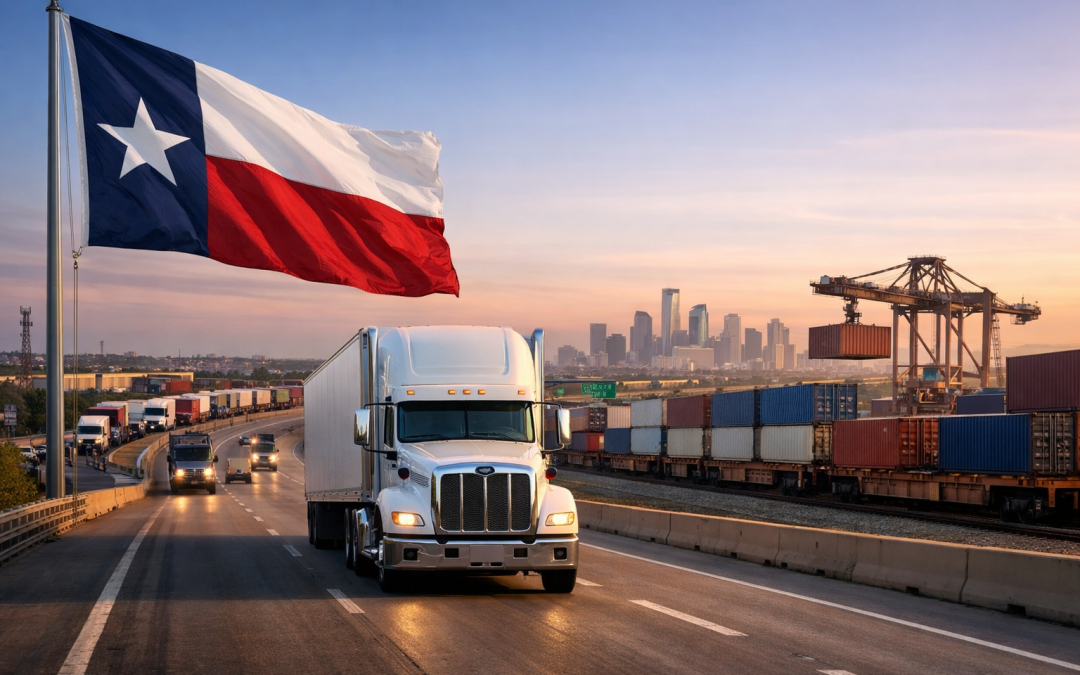
The freight industry is considered the lifeblood of the American economy. Texas in particular is one of the best places to launch a career as a freight broker, thanks to its sprawling highways, border trade, and booming logistics sector.
There are many reasons to pursue this career track, from its potentially lucrative nature to the independence you get from running your own business. Freight brokering can be incredibly fulfilling. However, like any legitimate business, it requires planning, licensing, training, and hustle.
If you’re wondering how to become a freight broker in Texas, you’ve come to the right place. Here, One Freight Broker will break down everything you need to know to start your freight broker business in Texas, from legal requirements to building relationships with shippers and carriers.
What Does a Freight Broker Do?
Before diving deeper into the process of becoming a freight broker, we should at least talk about what this role entails.
Simply put, a freight broker is the middleman between a shipper and a carrier in the transportation industry. Shippers are those who have goods they need to move, while carriers are the trucking companies and transportation service providers with the capacity to move them. A broker serves as the intermediary that connects these two parties, negotiating rates, handling the paperwork, and solving problems that arise during shipping.
A freight broker’s goal is to make sure goods can move from point A to point B as smoothly and efficiently as possible to streamline the supply chain. Their role begins with matching loads with the most suitable carriers and includes all the logistical requirements of the shipment. With their help, shippers and carriers can focus more on their core operations, saving time and money in the process.
The best part is that you don’t need a degree to become a freight broker. However, there are some things you need, and we’re here to discuss those.
How to Become a Freight Broker in Texas
Texas has long been a powerhouse in the freight and logistics industry, and for good reason. With its central location, extensive highway and rail infrastructure, and multiple major ports like Houston and Corpus Christi, the state serves as a natural hub for freight movement across the US and into Mexico.
The booming economy—driven by industries like oil and gas, agriculture, technology, and manufacturing—creates constant demand for freight services. As goods flow in and out of Texas in massive volumes, the need for skilled freight brokers who can coordinate, negotiate, and optimize shipments is only increasing.
But how do you become a freight broker in Texas? Here are some steps you need to take:
Step 1: Learn the Basics of the Freight Industry
Before you jump right into licensing and setting up a business, you need to familiarize yourself with the freight and logistics industry. Beyond understanding the role of a freight broker, you also need to learn how freight moves across different modes—like trucking, rail, air, and sea—along with the regulations that govern these movements.
Aspiring brokers should also learn basic terminology, the types of freight, and the dynamics of pricing and contracts. Starting with industry blogs, forums, YouTube channels, or working for a broker as a freight agent can provide valuable, real-world insight before you go all in.
Step 2: Take a Freight Broker Training Course (Optional but Smart)
There is no educational requirement to become a freight broker. However, enrolling in a freight broker training course can dramatically shorten the learning curve.
These courses typically cover everything you need to know in order to fulfill your role effectively, from industry regulations to marketing your brokerage. Many programs also provide downloadable templates, contracts, and cheat sheets that will prove useful once you’re licensed. Some courses even offer job placement assistance or mentorship options.
Go for reputable courses taught by experienced freight brokers. This will help you get a full grasp of the modern logistics landscape. It will give you the confidence to handle the real-world challenges of freight brokerage, from finding carriers to negotiating lanes and managing your finances.
If you’re starting from scratch, think of this as a small investment that could save you from costly mistakes later.
Step 3: Register Your Business in Texas
To operate legally in Texas, first you need to register your freight brokerage as a business entity. Most brokers choose to form an LLC (Limited Liability Company) because it offers liability protection and is relatively simple to manage. You can register your LLC through the Texas Secretary of State’s website or use an online business formation service to handle the paperwork.
Don’t forget to apply for an EIN (Employer Identification Number) from the IRS, which you’ll need for taxes and to open a business bank account. You’ll also want to register your business name if it differs from your legal entity name.
Additionally, check with local authorities for any county or city-specific business licenses or permits that might apply. Having your business legally set up is not only a requirement for your freight broker license but also helps build trust with clients and carriers.
If you begin your broker journey in a legitimate and organized fashion, this will help set the tone for your professional operations, which will in turn set you up for long-term success.
Step 4: Apply for a Freight Broker License (Broker Authority)
The core of becoming a freight broker in Texas—or anywhere in the US, for that matter—is obtaining your freight broker license from the Federal Motor Carrier Safety Administration (FMCSA). Also known as a broker authority, obtaining this license involves filling out Form OP-1, which you may also do online via the Unified Registration System.
Remember that you must also designate a process agent for every state in which you plan to operate using Form BOC-3. If you are planning on operating in multiple states and want to make this step more convenient, One Freight Broker recommends using a national process agent service.
Freight brokers also need to obtain a $75,000 freight broker bond (BMC-84) or establish a trust fund (BMC-85) as proof of financial responsibility. These are meant to protect carriers in case you fail to pay them.
Once everything is filed and approved, you’ll receive your Motor Carrier (MC) number. The entire process usually takes a few weeks, but once you have your MC number active, you can legally begin brokering freight across state lines.
Step 5: Set Up Your Office and Tools
With your license secured, it’s time to set up your freight brokerage operation. Whether you work from a home office or a commercial space is up to you. Just make sure it’s equipped with a reliable internet connection, phone system, computer, and printer.
You will also need some industry-specific software like a Transportation Management System (TMS), load boards, accounting tools, and customer relationship management (CRM) software to run efficiently.
Step 6: Start Finding Shippers and Carriers
The freight brokerage industry is all about networking, so you need to start working on your relationships once you’re officially licensed and ready to operate.
If you want to find shippers to work with, load boards make for an excellent starting point. Here, you can find shippers who need to move goods regularly—these are your potential clients. You can reach out through cold calls, emails, or LinkedIn, industry directories. Other brokers also expand their network by attending trade shows or logistics networking events in Texas.
Focus on identifying industries that ship frequently, like oil and gas, agriculture, automotive, and manufacturing. Use every business opportunity to showcase your strengths. Being reliable is the best way to grow your network and build a consistent stream of business as a freight broker.
Remember that as a broker, your network shouldn’t just include shippers, but also carriers. For this, you need to vet them carefully: check their MC numbers, insurance coverage, safety ratings, and references. A solid carrier network ensures you can cover loads quickly and reliably, which boosts your reputation with shippers.
Treat your carriers well—pay them on time, communicate clearly, and solve problems fast—and they’ll stick with you even when other brokers offer a few more cents per mile.
How Much Does It Cost to Become a Freight Broker in Texas?
The total startup cost to become a freight broker in Texas ranges between $3,000 and $5,000, depending on whether you opt for professional training and other services.
The core expense is the $75,000 freight broker surety bond, but you won’t have to pay that entire amount upfront—typically, you’ll pay a premium of $500 to $2,000 annually depending on your credit. Other fixed costs include the $300 FMCSA application fee and fees for setting up a business entity, which can range from $300 to $800 in Texas. If you hire a process agent service to file the BOC-3 form for you, expect to pay an additional $50 to $150.
Optional—but highly recommended—costs include freight broker training programs, which can cost between $500 and $2,500.
Software tools such as load boards, TMS (Transportation Management Software), and credit checking services may add ongoing monthly expenses. While the upfront investment can seem steep, keeping your overhead lean and taking advantage of digital tools can help you become competitive, which is especially important for brokers who are only starting out.
Freight Broker Income Potential in Texas
Texas is one of the best states to be a freight broker due to its massive infrastructure, numerous shipping hubs, and proximity to Mexico for cross-border logistics. On average, freight brokers in Texas earn between $40,000 and $90,000 annually, with top performers and agency owners earning six figures or more.
However, your income potential largely depends on the volume of loads you handle, your margins, and your ability to build strong relationships with both shippers and carriers. Entry-level brokers may take a few months to secure steady clients, but with hustle and strategy, it’s possible to scale quickly.
Tips for Succeeding as a Freight Broker in Texas
The freight industry in Texas is booming, but that also means it’s highly competitive. Success in this space requires strategic focus, solid carrier relationships, and the discipline to grow sustainably. Here are some tips you can follow to increase your chances of success:
Specialize in a Niche
Don’t try to be everything to everyone. In this industry, it’s better to specialize in something, whether it’s refrigerated goods, oilfield equipment, or cross-border freight with Mexico. Choosing a niche allows you to develop expert knowledge and a reliable customer base. Specialization also makes your marketing more targeted and your services more valuable.
Focus on Service, Not Just Price
While many shippers shop around for low rates, what keeps them loyal is reliability and communication. Provide consistent updates, solve problems quickly, and make your clients feel prioritized. In the long run, top-notch service beats cheap quotes when it comes to building long-term relationships.
Start Small
You don’t need to handle 50 loads a week right away. Start with a few reliable shippers and master the process. Scaling too fast can lead to sloppy execution, unpaid invoices, and burned relationships. Quality over quantity is the smart path when establishing your brokerage.
Always Vet Carriers
Every broker’s worst nightmare is dealing with an unreliable or fraudulent carrier. Always check carrier authority, insurance, safety records, and reviews before assigning a load. In Texas, where long hauls and border freight are common, vetting carriers is critical for protecting your clients and reputation.
Keep Learning and Stay Resilient
The freight market is constantly shifting—fuel prices, regulations, and technology all evolve. Stay updated through industry news, conferences, and training. Just as important, develop thick skin. You’ll face slow weeks, late payments, and unexpected setbacks, but staying adaptable and persistent will set you apart.
Work with One Freight Broker
With its booming economy, strategic location, and massive freight volume, Texas is an ideal state to launch a brokering business. While becoming a freight broker here isn’t complicated, it does require commitment.
If you would rather work with a freight broker that is already established in the industry and known for its reliable freight transportation services, look no further than One Freight Broker.
Here at One Freight Broker, we offer a unique and inclusive approach that cuts shipping costs significantly by reducing client dependence on intermediaries. We allow our shipping partners to establish direct, beneficial, and enduring connections with dependable trucking allies. That is how we’ve enhanced the profitability of asset fleets and passed on high-volume discounts to our clients.
When you partner with One Freight Broker, you gain access to a vast network of carriers, competitive rates, and a team of experts dedicated to optimizing your shipping process. We can handle everything from LTL to FTL, domestic to international, and even expedited shipping. This is why we are now the go-to choice for shippers everywhere.
Whether you’re shipping domestically or require assistance with more complex logistics, we’re here to ensure your freight reaches its destination efficiently and cost-effectively.
Contact us at 800.716.7608 for expert guidance and to ensure your shipments reach their destination safely and on time.
Contact Us Today
Ready to simplify your shipping experience? Contact One Freight Broker to discover how our expertise can benefit your business, ensuring your cargo is in safe hands every step of the way.
For more information on how we can assist your business, visit our website at 1fr8.broker.