
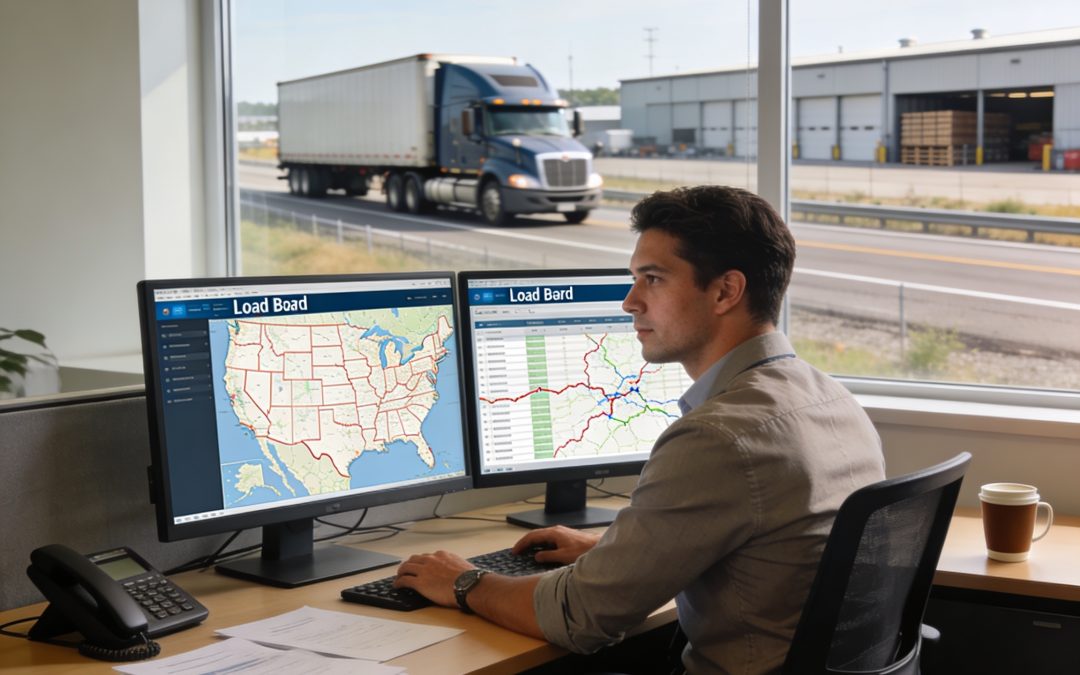
The freight industry depends on relationships, execution, and trust. Freight agents sit at the center of that process by connecting shippers with carriers and managing the daily movement of freight across the country.
For people entering logistics sales, understanding how to become a freight agent involves much more than learning load boards and rate negotiation. The strongest agents understand carrier operations, procurement strategy, lane management, and shipper expectations.
What Does a Freight Agent Do?
A freight agent works under a licensed freight broker and helps coordinate transportation between shippers and carriers. Agents often focus on sales, customer relationships, pricing, and shipment execution.
Unlike carriers, freight agents do not own trucks. Their role is to source capacity, manage communication, and help freight move efficiently.
Freight Agent vs. Freight Broker
A freight broker holds the operating authority and legal responsibility for arranging transportation. A freight agent operates under that broker’s authority.
Most freight agents do not need their own DOT authority or freight broker bond because they work through an established brokerage. This allows new agents to enter the industry without the overhead and compliance burden of starting a brokerage from scratch.
How Freight Agents Make Money
Most freight agents earn commission on the margin generated between shipper pricing and carrier cost. Commission structures vary widely across the industry.
In traditional brokerage models, high margins can create pricing instability. Transparent freight brokerages increasingly use low fixed margin models to improve long-term customer retention.
“Low fixed margin removes the incentive to inflate freight rates.”
Why Relationship Management Matters in Freight
Freight is operationally complex. Weather delays, driver shortages, detention, rejected tenders, and seasonal surges all affect service.
Strong freight agents help shippers solve problems consistently rather than simply quoting loads. Long-term relationships usually matter more than winning a single shipment on price.
Skills You Need to Become a Freight Agent
Successful freight agents combine sales ability with operational understanding.
Sales and Communication
Freight agents spend a large portion of their time building shipper relationships. This includes:
- Prospecting
- Cold outreach
- Quoting freight
- Managing service updates
- Resolving shipment issues
Clear communication matters because logistics failures can affect inventory, production schedules, and customer deliveries.
Carrier Sourcing and Vetting
Carrier sourcing is one of the most important skills in freight brokerage.
Agents need to understand:
- FMCSA safety ratings
- Insurance verification
- COI requirements
- Authority status
- Equipment availability
- Lane history
A reefer carrier moving pharmaceutical freight has very different operational requirements than a flatbed carrier hauling steel.
Understanding Freight Modes, FTL, LTL, Reefer, Flatbed
Freight agents should understand the differences between:
- FTL shipping
- LTL freight
- Reefer freight
- Dry van operations
- Flatbed transportation
- Drop trailer programs
Each mode involves different pricing structures, transit expectations, and accessorial risks.
Rate Negotiation and Accessorial Management
New agents often focus only on linehaul pricing. Experienced agents understand detention, layover, lumper fees, fuel surcharges, and TONU exposure.
For example, a live-load dry van shipment may appear profitable until four hours of detention eliminate margin entirely.
Do You Need a License to Become a Freight Agent?
Most freight agents do not need their own operating authority.
DOT Authority and MC Numbers Explained
Freight brokers need:
- FMCSA registration
- MC authority
- Surety bond
- Carrier compliance processes
Freight agents typically operate under the authority of the brokerage they join.
Why Agents Work Under a Licensed Freight Broker
Joining an established brokerage gives agents access to:
- Carrier networks
- TMS platforms
- Accounting support
- Compliance teams
- Credit management
- Shipper contracts
This reduces startup costs and operational risk.
Insurance, COI, and Compliance Basics
Freight agents should still understand:
- Cargo insurance
- Liability insurance
- COI verification
- ELD compliance
- Safety monitoring
Shippers increasingly expect brokers and agents to document compliance standards before awarding freight.
How to Start as a Freight Agent
Join an Established Freight Brokerage
Most successful agents begin by partnering with an existing brokerage platform.
When evaluating brokerages, agents should examine:
- Commission structure
- Technology stack
- Carrier vetting standards
- Transparency policies
- Back solicitation agreements
- Operational support
Some brokerages focus only on transactional spot freight. Others prioritize long-term lane management and procurement support.
Learn Transportation Management Systems and Load Boards
Freight agents rely heavily on transportation software.
Common tools include:
- TMS platforms
- Load boards
- Carrier tracking tools
- EDI systems
- Rate databases
Technology improves visibility, but relationships still drive capacity consistency.
Build a Carrier Network
The strongest agents build repeat carrier relationships instead of sourcing every shipment from scratch.
“Test carriers on your lanes before awarding long-term freight.”
For example, a broker managing dedicated Midwest reefer lanes may initially test carriers on lower-volume shipments before moving them into core route guide capacity.
Start Prospecting Shippers
New agents often focus on industries they already understand:
- Food and beverage
- Manufacturing
- Retail
- Construction
- Automotive
Shippers usually value consistency and communication more than the absolute lowest rate.
How Transparent Freight Brokerages Change the Freight Agent Model
The freight brokerage industry has traditionally operated with limited pricing visibility. That is beginning to change.
Low Fixed Margin Pricing
Some transparent brokerages use fixed margins instead of percentage spreads.
This approach helps:
- Stabilize pricing
- Improve procurement trust
- Reduce rate volatility
- Support long-term relationships
Carrier Name and Rate Disclosure
Traditional brokerage models often hide carrier identity from shippers.
Transparent models disclose:
- Carrier names
- Carrier rates
- Margin structure
- Service metrics
“We disclose carrier names and rates so shippers see the full picture.”
This improves accountability and operational alignment.
No Back Solicitation Trap
Some freight agreements use aggressive back solicitation clauses that restrict direct communication between carriers and shippers.
Transparent brokerages may reduce or eliminate these restrictions while still providing procurement support, carrier sourcing, and operational management.
Why Stable Pricing Improves Retention
Procurement teams increasingly prioritize predictable pricing over short-term market swings.
A stable route guide with vetted carriers often outperforms constantly rebidding freight in volatile spot markets.
Contract vs. Spot Freight for New Agents
Spot Freight Challenges
Spot freight can create fast opportunities but also significant volatility.
Rates may spike during:
- Produce season
- Weather disruptions
- Capacity shortages
- Holiday surges
New agents relying entirely on spot freight often struggle with consistency.
Building Dedicated Lanes
Dedicated lanes improve:
- Service consistency
- Carrier familiarity
- Transit reliability
- Pricing stability
For example, a recurring Chicago-to-Dallas dry van lane may perform better with a small group of committed carriers than with constantly changing spot capacity.
Route Guides and Carrier Scorecards
Professional freight operations increasingly use:
- Route guides
- Carrier scorecards
- KPI tracking
- On-time metrics
- Claims monitoring
These tools help procurement teams measure carrier performance objectively.
Common Mistakes New Freight Agents Make
Chasing Cheap Capacity
The lowest carrier rate is not always the lowest total cost.
Missed appointments, cargo claims, and service failures can cost far more than small pricing differences.
Ignoring Safety Ratings and Insurance
Freight agents should regularly monitor:
- FMCSA safety scores
- Insurance expiration
- Authority status
- Cargo coverage
Compliance failures can expose both brokers and shippers to risk.
Overpromising Transit Times
Many new agents underestimate weather, congestion, dock delays, and seasonal disruptions.
Setting realistic expectations improves shipper trust.
Failing to Understand Accessorials
Accessorials frequently affect profitability.
Detention, layovers, driver assist charges, and redelivery fees should be discussed before freight moves.
Real-World Freight Agent Scenario
Reefer Lane Example During Produce Season
A shipper moving refrigerated freight from California to the Midwest during produce season may face rapid capacity tightening.
An inexperienced agent may chase the cheapest spot rate daily. A stronger agent will secure vetted reefer carriers early, monitor temperature-control compliance, and maintain backup capacity.
This reduces service failures during seasonal demand spikes.
Flatbed Securement and Carrier Vetting Example
A flatbed shipment involving steel coils requires carriers with proper securement equipment and experience.
A low-cost carrier without the correct chains, tarps, or securement procedures creates significant safety exposure.
Experienced freight agents understand cargo-specific operational requirements before booking freight.
Frequently Asked Questions
How much do freight agents make?
Freight agent income varies widely based on customer relationships, shipment volume, and commission structure. Experienced agents with recurring shipper accounts can build substantial long-term revenue streams.
Can I become a freight agent without experience?
Yes. Many agents start in logistics sales or operations roles before building independent customer relationships.
Do freight agents need authority?
Most freight agents work under a licensed freight brokerage and do not need their own authority.
What software do freight agents use?
Common tools include transportation management systems, load boards, carrier tracking platforms, and freight pricing software.
How do freight agents find carriers?
Freight agents source carriers through load boards, direct carrier relationships, lane history, referrals, and brokerage carrier networks.
Final Thoughts
Learning how to become a freight agent requires more than understanding freight rates. The strongest agents understand carrier operations, procurement expectations, compliance, and long-term relationship management.
As freight markets become more transparent, agents who prioritize stable pricing, vetted carrier networks, and operational accountability will likely outperform purely transactional brokers.
For shippers, the right freight partner is not simply the cheapest option. It is the provider that delivers consistent service, visibility, and long-term lane stability.
Learn more about transparent freight solutions at Request a Quote.
To request a transparent quote or learn more, visit 1fr8.broker.