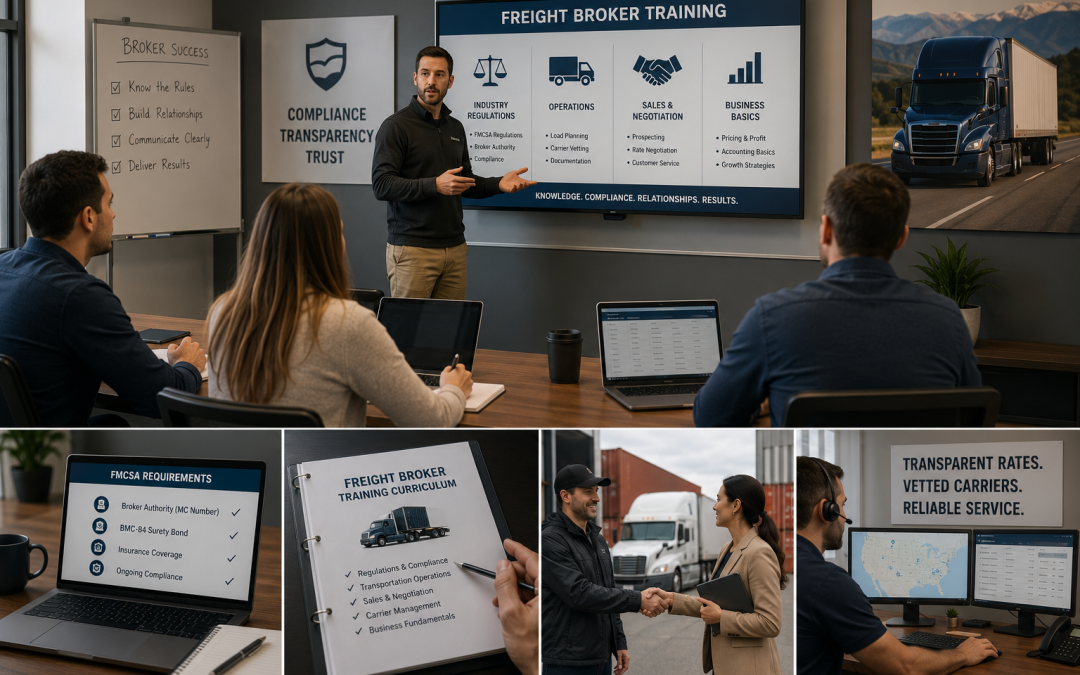
Freight broker training schools are designed to teach new brokers how to move freight, stay compliant, and run a brokerage business. For shippers and procurement teams, the real question is different. You want to know whether that training translates into stable rates, reliable carriers, and honest communication.
This guide explains what freight broker training schools teach, how that shows up in day-to-day service, and how One Freight Broker adds transparency on top of education.
What is a freight broker training school
A freight broker training school is a structured program that teaches people how to become freight brokers or agents. Programs usually cover regulations, sales, operations, and the basics of running a brokerage. Many schools now offer online or hybrid formats with self-paced modules, live coaching, or both.cotasystems.com+1
A broker does not legally need to complete a specific school, but they do need FMCSA broker authority, a BMC-84 surety bond, and proper insurance before they can move loads.jwsuretybonds.com Training is how most brokers learn the practical side of the work, from quoting to carrier vetting.
For shippers, the school name matters less than whether the broker can prove they understand compliance, pricing, and execution on your lanes.
What good freight broker training schools actually teach
Compliance, authority, and risk basics
Strong programs start with the regulatory foundation. Brokers learn about FMCSA registration, DOT numbers, and what it means to hold broker authority rather than carrier authority. They also learn about the BMC-84 bond, insurance certificates, and Unified Carrier Registration.jwsuretybonds.com
Shippers feel this in simple ways. A trained broker will:
- Ask precise questions about your freight, commodities, and temperature requirements.
- Know when FSMA rules apply and what documentation you need for food grade or pharma loads.
- Request a current certificate of insurance and actually read it, not just file it.
Imagine a regional food shipper moving chilled product from a Midwest plant to grocery DCs. A trained broker will confirm reefer set points, pulp temperature checks, and whether continuous run is required. That reduces spoilage risk and protects your brand.
Pricing, modes, and accessorial management
Most schools spend time on pricing, modes, and accessorials because that is where new brokers either protect or damage shipper relationships. Good training explains the differences between:
- FTL and LTL
- Dry van, reefer, and flatbed
- Dedicated lanes versus pure spot moves
Courses also teach how accessorials work, including detention, layover, TONU, and fuel surcharges.cotasystems.com+1
For example, think about a live load lane from a manufacturing site in Ohio to a DC in Georgia. A trained broker will factor in historical dwell at origin, average detention risk, and appointment patterns. They can explain why a slightly higher linehaul with a tight detention policy may cost you less over a quarter than a cheap rate with frequent delays and surprise fees.
Carrier sourcing, vetting, and lane profiling
Solid training programs teach brokers how to find, onboard, and monitor carriers. That usually includes:
- Pulling safety ratings and inspection histories
- Verifying insurance and limits on a COI
- Understanding ELD requirements and hours of service
- Building basic lane profiles and scorecards
As brokers move from school to live freight, lane profiling becomes the bridge to shipper outcomes. They learn to ask:
- Which carriers perform best on this lane
- How seasonality affects capacity and price
- What backup options exist if the primary carrier declines
One Freight Broker builds on this training with a vetted network of asset based carriers, lane scorecards, and shared performance reviews. That starts with the same fundamentals many schools teach, then adds deeper screening and continuous monitoring.
Online vs in-person freight broker training schools
Common formats and typical timeframes
Today, many freight broker training schools offer three main options:
- Fully online, self-paced programs
- Hybrid programs with live virtual sessions
- Traditional classroom programs in selected cities
Durations range from a few weeks to six months, and cost can range from a few hundred dollars to several thousand, depending on the provider and level of support.Only Trade Schools+1
Online programs work well for people who need flexibility. Classroom programs often include role plays, real load scenarios, and closer instructor feedback. Cota Systems and other comparison guides highlight both formats as viable starting points for new brokers.cotasystems.com
What shippers should care about
Shippers do not need to audit the full syllabus. Instead, ask targeted questions:
- “What training did your brokers complete around carrier vetting and contracts”
- “How does your team continue to learn after the initial course”
- “Do you simulate real-world exceptions, like weather events or missed appointments, in training”
The format matters less than whether the broker can prove they learned to protect your freight and your reputation.
For more background on broker licensing, authority, and bonds, shippers can review FMCSA and surety resources such as JW Surety Bonds’ overview of broker licensing and training needs.jwsuretybonds.com
To request a transparent quote or learn more, visit 1fr8.broker.