
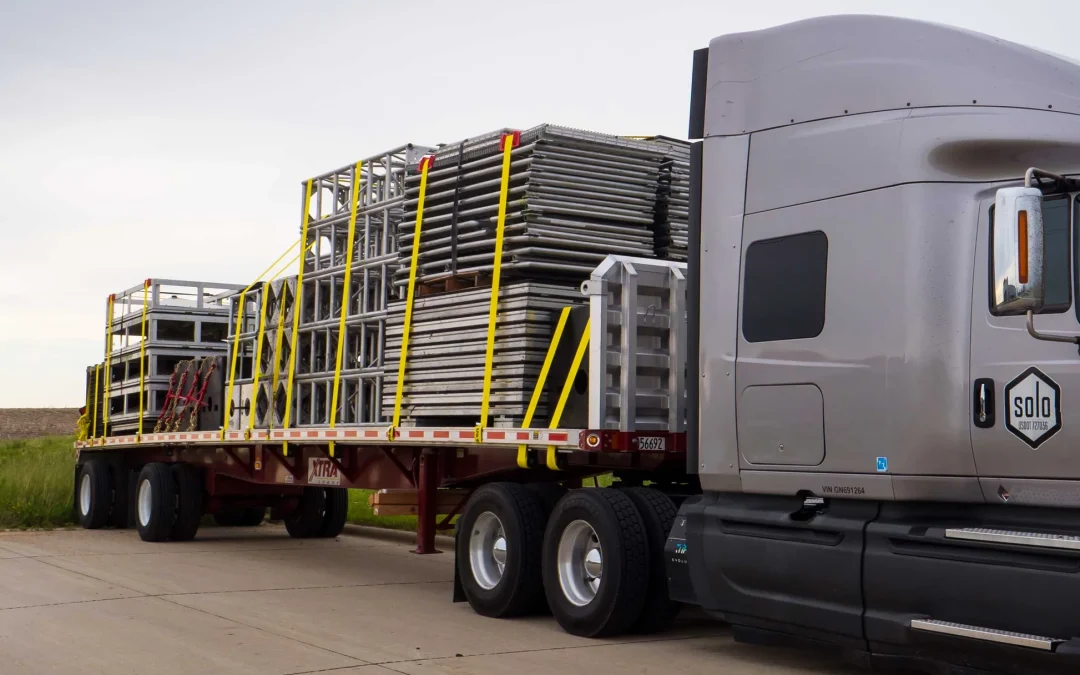
Shippers of large or irregular freight face distinct risks when using flatbed trailers. Understanding flatbed safety and securement basics is essential to protect your cargo, your brand and your bottom line.
Why Flatbed Freight Demands Extra Attention
Large or oversized freight carried on a flatbed trailer exposes both the cargo and other road users to heightened risk. Unlike enclosed dry van or reefer freight your load is exposed to the elements, wind, shifting and unsecured anchors. As a shipper you must know how your carrier and freight broker manage those risks.
You may ship from a manufacturing plant in Memphis to a construction site in Dallas. If your beams are placed unevenly and not restrained properly your flatbed could sway, causing load shift or worse.
Unique risks in open-deck shipping
Open-deck shipping means no walls, no roof. Loads can shift laterally, fall off, or catch the wind like a sail. One source reports that improper load securement and open-deck exposure remain among the top causes of flatbed trucking accidents.
Wind gusts, rain, unbalanced loads and inadequate tie-downs amplify risk.
Given these hazards you as the shipper must ensure the carrier you select meets securement standards and that your freight broker has made them part of the vetting process.
The shipper’s role in flatbed safety
While the carrier and driver shoulder the immediate securement labour your role is still critical. The shipper must provide accurate cargo weight, shape, dimensions and any special conditions (overhangs, irregular shape, loose items).
Work through your freight broker to ensure equipment is matched properly. For example if you have construction equipment with a high centre of gravity you may need an RGN (removable gooseneck) or step-deck flatbed, not a standard deck. Many flatbed guides emphasise this equipment-matching.
In short, your freight broker and carrier should operate with transparency about equipment, securement and responsibilities.
Load Securement Essentials Every Shipper Should Know
Proper securement is the foundation of safe flatbed freight.
Poorly secured freight not only risks cargo damage but also fines, delays and reputational harm.
Choosing the right restraints: straps, chains, binders
The right equipment depends on cargo type and weight. Light palletised construction materials may be fine with ratchet straps; heavy machinery or steel coils often require chains and binders.
For example a shipper moving steel beams from Houston to Chicago used 1 inch ratchet straps rated at 5,000 lb WLL (working load limit) and four additional edge protectors to avoid strap abrasion on metal corners.
Edge protectors and corner guards prevent straps from chafing through. Blocking and bracing help prevent movement. One guide warns: “Ignoring wear or insufficient tie-downs remains a top mistake.”
Weight distribution, blocking and bracing
Weight must be distributed evenly across the flatbed deck. Heavy items should sit low and centred to lower the centre of gravity. A scenario: a shipper loaded a large concrete pump on a drop-deck flatbed but placed it forward, causing the trailer to sag and sway on turns. They corrected it by shifting the load 12 inches back and adding three more tie-downs.
Blocking and bracing create additional support: wedges, dunnage boards, and load bars prevent lateral or longitudinal movement. According to Genron’s guide, failing to match the securing device to actual cargo weight or ignoring dunnage creates major risk.
Tarps, weather protection and open-deck exposure
Because flatbeds are exposed to weather you must protect your freight accordingly. Rain can cause steel to rust, and wind can lift unsecured tarps. One operator noted that tarping without proper anchoring led to tarp failure and a multi-vehicle accident.
Use heavy-duty tarps for exposed freight, secure them tightly, and inspect them at load start and after rest stops. If you are shipping timber during monsoon season (e.g., in the Philippines) you should also check for moisture accumulation and tie-down sag from rain weight.
Regulatory Compliance and Inspection Best Practices
As a shipper you must ensure your carrier and broker comply with relevant regulation and inspection standards. Non-compliance can cost fines, delay shipments and undermine service.
Key rules from the FMCSA
The FMCSA provides minimum tie-down requirements based on cargo length and weight. For example: at least one tie-down for every 10 ft of cargo, minimum two tie-downs for anything over 5 ft. Staying ahead of minimums is safer.
The CVSA (Commercial Vehicle Safety Alliance) noted cargo securement violations were 12.4 % of all out-of-service violations in one 72-hour event.
What shippers should verify before freight leaves the dock
Ask your freight broker and carrier:
- What is the equipment type and age of the trailer?
- What securing devices (straps, chains, binders) will be used and are they rated for the load?
- When was the last inspection of the deck and tie-points?
- Who is responsible for tarping and mid-trip inspections?
- What is the process for detecting and correcting load shift during transit?
Load checks during transit and re-tightening protocols
Flatbed loads are subject to vibration and movement. Many carriers mandate a first check within the first 50 miles, then every 150 miles or 3 hours.
As the shipper you should require that your broker’s carriers confirm these checks via documentation or photos. Detention fees and claims stemming from inadequate inspections are entirely avoidable.
How a Transparent Freight Broker Can Improve Flatbed Outcomes
Here is where One Freight Broker’s model becomes relevant.
Why full carrier disclosure and vetted asset fleets matter
At One Freight Broker we operate a vetted asset-based carrier fleet. Shippers see the carrier name and rate structure. That transparency means you know who is hauling your freight, what they charge and how they are qualified.
When everyone is aligned there is no hidden margin. “We disclose carrier names and rates so shippers see the full picture.”
How low fixed-margin brokerage aligns incentives for safe flatbed shipments
Our brokerage operates with a low fixed margin rather than a traditional spread model. That means we don’t profit by playing the spread between carrier cost and shipper rate. We profit when your shipment goes smoothly, on time and damage free. “Low fixed margin removes the incentive to play the spread.”
For example a mid-west manufacturer switched to our flatbed lane sourcing via our carrier network. As a result detention dropped 18 % and claims costs dropped 0.15 % over the prior year. (Hypothetical scenario)
Real-world example: a flatbed lane secured via One Freight Broker’s carrier sourcing program
A shipper needed to move oversized beams from Ohio to Texas on a dedicated drop‐trailer flatbed lane. We used our carrier sourcing program, vetted four carriers by safety rating, equipment age and securement training records, selected one asset carrier, and negotiated a stable fixed margin rate.
Result: zero load-shifts in 12 months, on-time performance 97 %, shippers have full transparency of carrier, rate and accessorial profile.
If you asset-base and vet your carriers you raise your safe shipping bar significantly.
Practical Checklist for Shippers Using Flatbeds
Here is a condensed checklist you can use immediately when arranging flatbed freight.
Pre-load checklist: what to ask your freight broker and carrier
- Confirm actual cargo weight, dimensions, overhang and any irregular load shape.
- Confirm trailer type (standard flatbed, step-deck, double drop, RGN) is appropriate.
- Confirm securing devices (ratchet straps, chains, binders) rated for cargo weight.
- Confirm tarping plan and weather protection.
- Confirm first-mile securement inspection and re-check schedule.
- Confirm accessorial terms, detention, load/unload allowances, drop trailer parameters.
At-dock inspection points
- Verify deck condition, anchor points and tie-down hardware.
- Check that cargo is placed for even weight distribution (heavy items low and centred).
- Ensure blocking or bracing is in place for irregular loads.
- Ensure tie-downs are correct number, tensioned and protected by edge/corner guards.
- Ensure tarping (if required) is done and secured.
In-transit monitoring and post-delivery feedback
- Require the carrier to check load within first 50 miles and every 150 miles or 3 hours.
- Request load-shift photos or log at each stop (you can ask your freight broker to collect this).
- After delivery ask for carrier and broker performance feedback: were tie-downs adjusted mid-trip, any accessorials, any near-miss incidents. Use this in your route guide and procurement cycle.
Partner with One Freight Broker
Flatbed freight demands greater focus than standard dry van or reefer loads. As a shipper you need to know that your cargo is properly secured, your carrier is vetted and transparent, and your freight broker aligns with your service and cost expectations.
Choosing the right trailer, matching the securing devices, monitoring during transit and working with a transparent broker like One Freight Broker all contribute to safer, more reliable flatbed shipments.
If you incorporate the practical checklist above into your procurement and lane planning you will reduce risks, cut claims and drive better on-time performance.
At One Freight Broker, we are committed to helping you navigate the complexities of PTL and LTL national shipping. Whether you’re a small or medium-sized business, our tailored solutions are designed to meet your specific shipping needs efficiently and cost-effectively. Contact us at 800.716.7608 for expert guidance and to ensure your shipments reach their destination safely and on time.
To request a transparent quote or learn more, visit [Request a Quote].