
Drayage represents a critical link in a supply chain that starts at the port or rail terminal and ends at a warehouse or distribution centre. For shippers who handle containerised freight, understanding how to use a drayage load board can unlock greater visibility, control, and cost savings. In this article we explain the concept and show how partnering with a transparent freight broker adds further value.
Understanding Drayage and Why It Matters in Your Supply Chain
What is “drayage” in container logistics?
Drayage refers to short-haul transportation, typically moving a container between a port, rail yard or warehouse. DAT For example when a container arrives at a seaport and a truck hauls it 20-30 miles to an inland facility. That short leg can carry outsized importance in cost and service reliability.
The difference between general load boards and drayage-specific boards
General load boards serve a wide range of freight types — dry-van, flatbed, LTL, etc. A drayage load board is specialised for intermodal pickups, container moves, port-related freight and can offer filters for drop-hook, container type, rail ramp vs port. SPI Logistics+1 For shippers who handle drayage it means you see relevant capacity, not generic freight.
Key challenges: port congestion, chassis shortage, demurrage & detention
Ports can be congested. Chassis (the trailer frames that carry containers) may be in short supply. Missed appointments trigger demurrage or detention fees. A good drayage strategy anticipates those risks and limits surprises. translogisticsinc.com+1
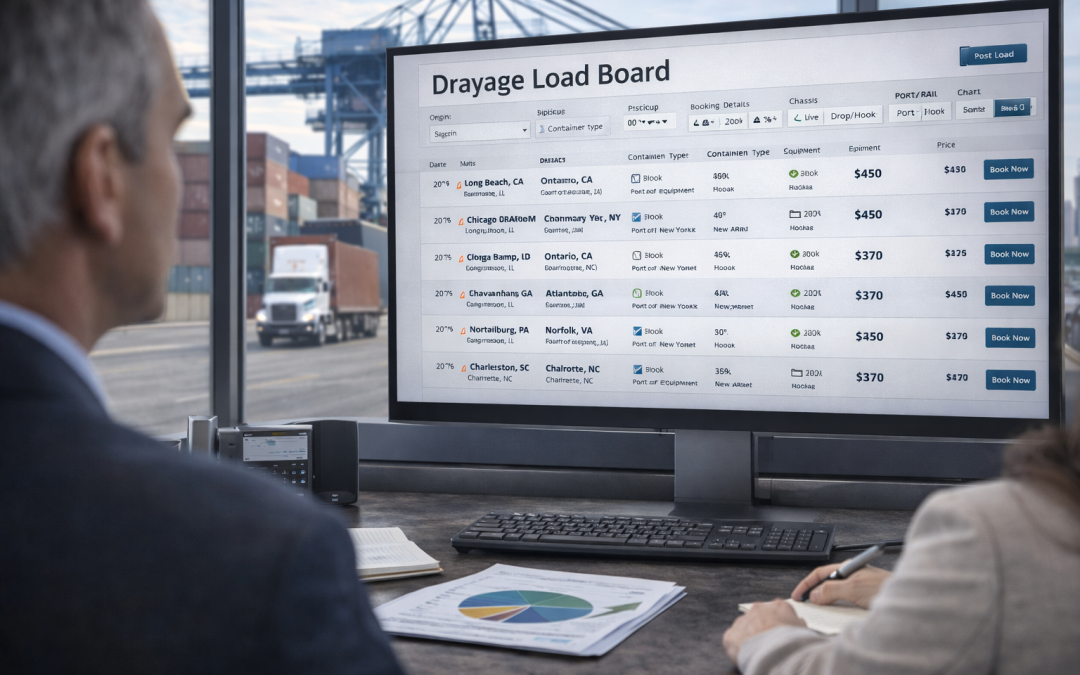
What a Drayage Load Board Looks Like and How Brokers & Carriers Use It
Unlike general freight load boards, it focuses on the unique complexities of intermodal freight—tracking container status, chassis availability, and port appointments. For logistics teams, understanding how these boards work can help improve visibility, coordination, and rate control on high-pressure port lanes.
Features of a drayage load board (filtering, container type, drop-hook vs live load)
The most effective drayage load boards allow users to filter by container type, port or rail ramp location, appointment time, and preferred service—such as drop-hook or live load. These filters help carriers identify suitable loads based on their equipment and capacity while allowing brokers to match shipments to available trucks quickly. Drop-hook options reduce dwell time by letting drivers swap preloaded trailers, while live load selections coordinate direct loading at facilities. Accurate filters ensure faster matches, fewer missed appointments, and more predictable scheduling.
The role of carriers vs brokers when using a load board
Carriers rely on drayage load boards to find freight that fits their operational lanes, ensuring efficient use of tractors and chassis. Brokers, meanwhile, use these platforms to post loads, monitor market pricing, and secure reliable capacity for their shippers. While carriers focus on filling trucks and minimizing empty miles, brokers focus on managing customer expectations, verifying credentials, and maintaining communication between both sides. A transparent broker uses the load board to disclose carrier names and rates, fostering trust rather than hiding behind markup practices.
Why many shippers struggle with load board transparency
Shippers often struggle with drayage load boards because most platforms hide key details such as the carrier’s identity, actual cost, or accessorial charges. Many traditional brokerages operate on variable spreads, making it unclear how much of the rate goes to the carrier versus the intermediary. Without transparency, shippers face uncertainty about who is moving their freight and whether they are paying fair market value. Transparent brokers resolve this by revealing carrier information, fixed margins, and full cost breakdowns so shippers can see exactly how their drayage dollars are spent.
How a Transparent Freight Brokerage (like One Freight Broker) Brings Value on Drayage Loads
Low fixed margin instead of opaque spread pricing
Traditional brokers may mark up carrier rates with hidden spreads. At One Freight Broker we use a low fixed margin model. The margin is fixed and disclosed so shippers know what they pay. This shifts alignments and builds trust.
Full carrier name disclosure and vetted asset fleets
We disclose the actual carrier name performing the shipment so shippers can evaluate safety, performance and compliance. We also restrict network to vetted asset-based carriers rather than random spot brokers.
Accessorial transparency (chassis, detention, drop-hook, demurrage)
Drayage often triggers accessorials. We provide full breakdown: chassis charges, detention time, port gate fees, drop-hook vs live load fees. This prevents surprise charges and helps shippers budget reliably.
Stable pricing on dedicated drayage lanes and route-guide programs
For consistent port-to-warehouse lanes we promote dedicated programs rather than one-off spot bookings. A route-guide style program with asset carriers improves on-time performance and stabilises rates across peaks and troughs.
Example scenario: A shipper imports at the Port of Los Angeles and hauls containers to an inland warehouse in Inland Empire. Instead of spot‐booking each container, we set up a dedicated drayage lane with fixed margin, disclosed carrier, and drop-trailer pool. The result: fewer missed appointments, no last-minute rate spikes, full cost transparency.
How to Evaluate and Choose a Drayage Load Board for Your Shipments
Questions to ask a broker: Do you post loads publicly? Do you show rate and carrier name?
Before engaging a broker ask: Which drayage load-board(s) do you use? Do you supply the carrier name performing the move? Do you show the finished cost to the shipper (including accessorials)? This filters for transparency.
Metrics to check: On-time pickup, demurrage avoidance, claims rate, detention incidents
Ask for metrics: What is your on-time pickup rate for drayage loads? How many demurrage or detention incidents occurred in past 12 months? What is your claims ratio specific to drayage carriers? These numbers reflect service reliability.
Example scenario: port to warehouse drayage lane via dedicated carrier vs spot booking
Compare two options: (A) Spot booking each container via a generic load board and different carriers. (B) Dedicated lane via a transparent broker, fixed margin, one carrier. Option B typically results in fewer missed windows, fewer extra charges, and greater cost predictability.
Practical Steps for Working with a Drayage Load Board through One Freight Broker
Setting up your lane profile and volume commitments
Work with us to define your lane: origin (port/rail), destination (warehouse/distribution), volume per week/month, preferred equipment/trailer type, drop-hook or live load preference. This profile allows quick posting to the drayage load board and faster carrier matches.
Aligning with asset-based carriers, drop trailer pools, live load options
We partner with vetted asset carriers who operate drop-trailer pools at ports or live-load service when required. This flexibility reduces dwell time and port gate fees.
Ensuring transparency: schedule scorecards, carrier performance reviews, rate roll-ups
We provide scorecards that track carrier performance on your lanes (pickup time, delivery time, accessorial incidence). We roll up rates so you see carrier cost + margin, and accessorials itemised separately.
FAQs about drayage load boards
- Can I see the carrier name and rate? Yes. We provide both.
- What is a drop-trailer program? Trailer is left at destination, driver picks up next load—reduces turnaround time.
- Contract vs spot for drayage lanes? Contract/dedicated gives stability. Spot is ok for ad-hoc but higher risk of delay and rate volatility.
- How do I avoid hidden costs? Require accessorial transparency. Track detention, demurrage metrics and incorporate gates/chassis fees up front.
Partner with One Freight Broker
If your operation handles containerised freight at ports or rail yards you cannot ignore drayage. A dedicated drayage load board plus a transparent freight broker model give you visibility, control and service reliability. Define your preferred lanes. Engage a broker who reveals carrier names, applies low fixed margin and manages accessorials proactively. The result: fewer surprises, stable rates and better on-time performance.
To request a transparent quote or learn more, visit [Request a Quote].