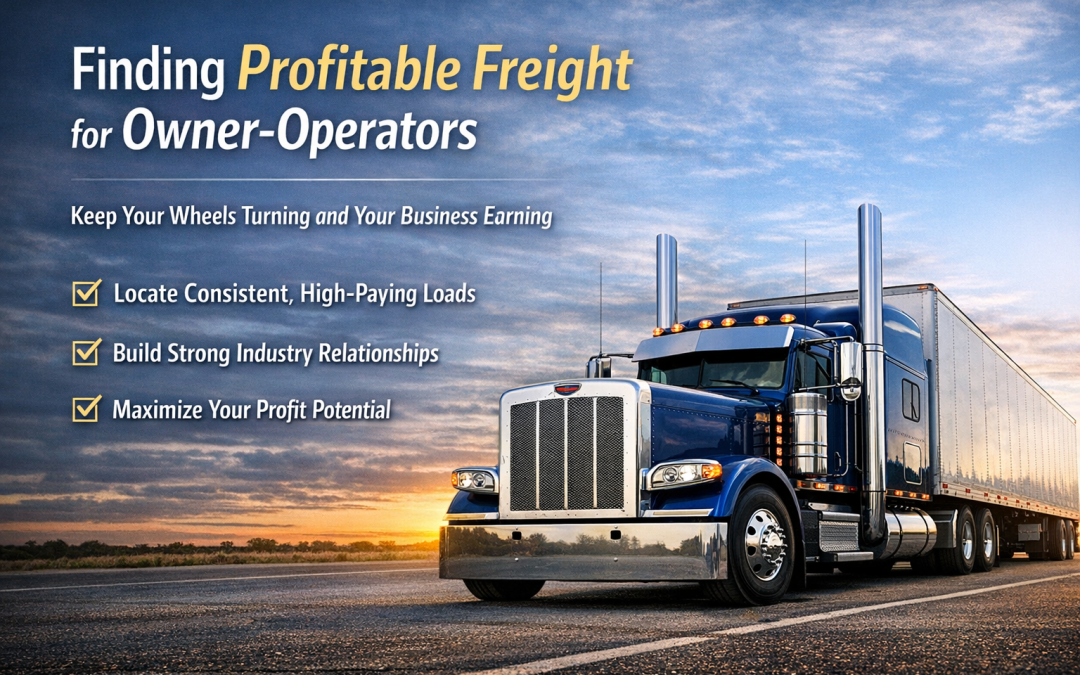
If you are an owner-operator, your truck might be your pride and joy. Many independent truckers feel the same way. But without freight in the trailer, it’s just a parked expense.
This means finding steady, profitable freight is the lifeblood of any owner-operator’s business—and it is important to understand the different ways this can be accomplished.
Whether you’re fresh out on your own or you’ve been driving independently for years, understanding how to consistently find loads—and profitable ones at that—is essential for survival and growth. In this guide, One Freight Broker will break down the main methods for finding loads as well as some of the strategies successful owner-operators use to rise above the competition.
Why Finding the Right Loads Matters
Before we dive into particular strategies, we need to emphasize that the challenge is not just finding loads but finding the right loads.
For owner-operators, this can mean the difference between turning a profit and just breaking even. The right load fits your truck’s capacity, your preferred lanes, and your delivery schedule—all while offering a fair rate that justifies the time and fuel invested.
If you choose your loads poorly, you may end up wasting hours on the road or get stuck with low-paying freight that eats into your margins. In a business where fuel prices, maintenance costs, and downtime can quickly add up, aligning each load with your operational needs is critical to staying financially healthy.
As an owner-operator, selecting the right load is even more important because it also impacts your work-life balance—not just your profitability. Loads that align with your preferred routes can keep you closer to home and reduce stress, giving you more time and energy to handle other tasks.
In the long run, this may translate to better rates, better relationships with shippers and brokers, repeat business, a reputation for reliability, and long-term sustainability for your business. Simply put, loads can do so much more for your business than just bring another paycheck—they can help you build a sustainable and respected trucking operation.
Main Ways Owner-Operators Find Loads
In today’s freight market, it’s now considered too risky for an owner-operator to just rely on a single source of loads. Rates, freight availability, and customer needs can shift quickly, so having multiple ways to find work helps keep the truck moving and the revenue steady.
By combining different strategies independent truckers can adapt to market swings more reliably while avoiding empty miles. If you want to keep your schedules full, here are some ways to find loads:
Load Boards
For newer owner-operators who are still building their customer base, load boards are one of the most accessible tools for finding freight. These online platforms connect truckers directly with freight that needs moving, and most of them allow users to filter by route, freight type, and rate.
Some popular load boards include DAT, Truckstop.com, and 123Loadboard. While competition can be high—especially for the most profitable lanes—load boards offer a steady stream of opportunities for those willing to be flexible with schedules and destinations.
Just keep in mind that load boards can be a double-edged sword. Here, rates are often more volatile as shippers and brokers may post last-minute or lower-paying loads to fill urgent needs.
Savvy truckers learn to use load boards strategically: filling gaps in their schedule, building relationships from initial hauls, and keeping an eye out for repeat opportunities with good-paying customers. Over time, this can turn what starts as a one-off load into a recurring revenue stream.
Freight Brokers
Freight brokers are the matchmakers of the transportation industry, acting as middlemen between shippers who have goods that need to be moved and carriers who have the capacity to move them.
For many owner-operators, brokers are an essential part of their freight-finding strategy, especially for those who are just starting out or entering a new lane. The most successful brokers have established shipper networks, allowing them to match loads with the most suitable carriers instantly. This gives drivers access to freight they might not be able to secure on their own.
The trade-off is that brokers take a cut of the rate, which means the driver isn’t getting the full amount the shipper paid. Still, the convenience and reliability brokers provide can be worth it, particularly when building a consistent workload.
Experienced owner-operators often cultivate relationships with a handful of trustworthy brokers who understand their preferences and lanes so they can just focus on driving without worrying about logistics.
Direct Shipper Contracts
While load boards and freight brokers are perfect for when you’re only starting out, eventually you will want to secure direct contracts with shippers. This is the holy grail for many owner-operators.
These arrangements cut out the middleman, allowing truckers to negotiate directly with businesses that need ongoing freight transportation. The benefits are clear: better rates, more predictable schedules, and the possibility of building long-term, stable income.
However, these contracts take time to land and require building trust with shippers. Many drivers start with one-off loads from a shipper and gradually prove themselves through reliability, professionalism, and on-time deliveries.
Once a strong relationship is formed, the shipper may be more willing to sign a contract, ensuring consistent work for the owner-operator and streamlining the freight-finding process.
Networking in the Industry
The freight industry is all about networking.
While technology has shifted the landscape a bit, old-school networking remains one of the most effective ways to find good-paying loads for owner-operators. Talking to other drivers at truck stops, attending industry events, or joining trucking associations can open doors to freight opportunities that never make it to a load board.
Word-of-mouth recommendations can lead to valuable introductions to brokers or shippers looking for reliable carriers. Keep in mind that networking isn’t just about finding freight: it’s also about building a reputation. When other industry professionals know you as dependable and easy to work with, they’re more likely to send work your way.
In a business where trust is currency, having a strong professional network can mean the difference between scrambling for loads and having your phone ring constantly with new opportunities.
Dispatch Services
Another option is to use dispatch services. Many owner-operators use these to help them find and negotiate loads.
Dispatch services act as a dedicated back-office team, combing through load boards, contacting brokers, and securing freight that fits your preferences for lanes, equipment, and pay. While they take a percentage of each load or charge a flat fee, dispatchers can save valuable time and help maximize profits—especially for truckers who’d rather focus on driving than sales calls.
Contracting with Larger Carriers
Leasing on with a larger carrier is another way to keep consistent freight flowing. In this arrangement, the carrier provides access to their customer base, negotiated rates, and sometimes even backhaul opportunities.
While you give up some independence and may have to run under their authority, the trade-off is steadier work, less paperwork, and fewer gaps between loads. It’s an appealing option for new owner-operators or those in slow markets.
Government and Specialized Contracts
For those willing to put in some more effort, bidding on government contracts or hauling specialized freight can provide lucrative and stable work. Federal, state, and local agencies often need reliable carriers for everything from military equipment to disaster relief supplies.
Similarly, niche sectors like medical, oversize, or hazmat hauling can pay premium rates for experienced drivers with the right endorsements and equipment. While these opportunities require paperwork, compliance checks, and sometimes longer lead times, the payoff is often well worth the investment.
Common Mistakes Owner-Operators Make When Finding Loads
Running a profitable owner-operator business is not just about finding loads—it’s also about making smart decisions and avoiding costly mistakes. Here are some common pitfalls to avoid if you are not a fan of wasted miles, low-paying hauls, and missed opportunities:
Chasing Every Load
Many owner-operators fall into the trap of taking any load that’s available just to keep the wheels turning. This “chase everything” approach may sound like a good idea, but it often leads to low-paying runs, excessive deadhead miles, and burnout. A better strategy is to focus on lanes, shippers, and brokers that consistently provide solid rates and fit your strengths.
Ignoring Backhauls
Failing to plan for a return trip can quickly eat away at your profits. Without a backhaul, you’re driving empty—burning fuel and time without generating income. Smart operators line up return loads in advance or choose freight lanes with strong backhaul opportunities to maximize revenue on every trip.
Failing to Vet Brokers
Not every broker is created equal, and skipping due diligence can result in late payments, poor communication, or untrustworthy partners. Checking broker credit ratings, reviews, and payment histories ensures you’re working with professionals who respect your time and value your work.
Not Tracking KPIs
If you’re not measuring key performance indicators like cost per mile, revenue per mile, or deadhead percentage, you’re flying blind. Without data, it’s easy to overlook inefficiencies and miss opportunities for higher profits. Tracking and analyzing your numbers helps you make informed decisions and grow your business strategically.
Work with One Freight Broker
If you’re an owner-operator, finding loads is the foundation of your business. While there are many ways to source freight, the most successful drivers use a mix of these methods and focus on building long-term relationships.
With load boards and brokers, you can get started on establishing a continuous stream of business opportunities. But as your business grows, you may find yourself relying more and more on the connections you’ve developed along the way. Long-term success is not about chasing every load but rather establishing a well-oiled, strategic system built on reliability and results.
For those who would like to work with an established freight broker that is considered the go-to choice for shippers everywhere, One Freight Broker is the ideal partner.
One Freight Broker is not only known for its reliable freight transportation services but also for its exceptional customer service and competitive pricing. We offer a wide range of services covering everything from LTL to FTL, domestic to international, and even expedited shipping, ensuring that you can find the perfect fit for your needs.
One Freight Broker is also known for its inclusive approach that allows clients to establish direct, beneficial, and enduring connections with dependable trucking allies. By reducing their dependence on intermediaries, we pass on high-volume discounts to our shipping partners.
When you partner with One Freight Broker, you gain access to a vast network of carriers, competitive rates, and a team of experts dedicated to optimizing your shipping process. Whether you’re shipping domestically or require assistance with more complex logistics, we’re here to ensure your freight reaches its destination efficiently and cost-effectively.
Contact us at 800.716.7608 for expert guidance and to ensure your shipments reach their destination safely and on time.
Contact Us Today
Ready to simplify your shipping experience? Contact One Freight Broker to discover how our expertise can benefit your business, ensuring your cargo is in safe hands every step of the way.
For more information on how we can assist your business, visit our website at 1fr8.broker.